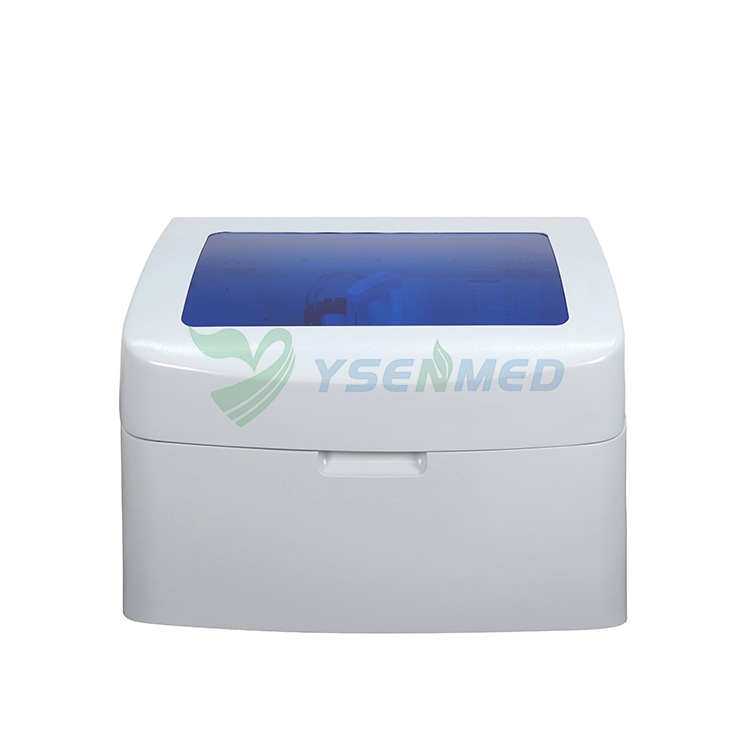
Laboratory directors, hospital procurement teams, and clinical pathologists actively search for the ideal automated clinical chemistry analyzer when upgrading or expanding their testing capabilities. Selecting the right system directly affects test accuracy, daily throughput, operational efficiency, and long-term reliability in busy hospital and clinic laboratories. This comprehensive buying guide explains how to choose the right automated clinical chemistry analyzer for your lab, covering essential features, evaluation criteria, and practical considerations that help medical facilities make informed decisions. Moreover, suppliers like Ysenmed provide a wide selection of automated chemistry analyzer solutions tailored to different laboratory sizes and testing volumes.
Modern laboratories face growing test volumes, tighter turnaround time requirements, staff shortages, and increasing demands for quality and traceability. Therefore, choosing an appropriate clinical chemistry analyzer machine becomes a strategic decision rather than a simple equipment purchase.
Additionally, laboratories now need systems that integrate smoothly with Laboratory Information Systems (LIS), deliver consistent results across large test menus, and support efficient reagent management. However, selecting the wrong analyzer can lead to frequent downtime, higher maintenance costs, and compromised result reliability. Consequently, a structured evaluation process helps facilities secure automated lab analyzer solutions that enhance productivity while maintaining diagnostic excellence.
Furthermore, regulatory requirements for quality control, calibration traceability, and data integrity continue to evolve. Facilities that invest in modern chemistry analyzer for labs with robust built-in compliance tools reduce administrative burden and simplify accreditation processes. Therefore, understanding these real-world demands guides smarter purchasing decisions.
Key Features to Evaluate in an Automated Clinical Chemistry Analyzer
Experienced buyers focus on several critical aspects when comparing high-throughput chemistry analyzer options.
1. Throughput and Testing Capacity
Laboratories must match analyzer throughput to their daily test volume. Low-to-medium throughput systems suit smaller clinics and private labs, while high-throughput platforms serve large hospital laboratories that process hundreds or thousands of tests daily.
Moreover, flexible systems that allow random access and STAT prioritization help manage urgent samples without disrupting routine workflows. However, overestimating required throughput leads to unnecessary complexity and higher maintenance needs. Therefore, accurate volume forecasting becomes essential during the selection process.
2. Test Menu Breadth and Expandability
A comprehensive test menu covering liver function, kidney function, cardiac markers, lipids, electrolytes, and specialty assays reduces the need for multiple instruments. Additionally, systems that support future menu expansion through new reagents provide better long-term value.
Furthermore, open-channel capability allows laboratories to implement third-party reagents when clinically appropriate. Consequently, flexible test menus support both current and evolving diagnostic needs.
3. Accuracy, Precision, and Quality Control
Reliable automated clinical chemistry analyzer performance depends on consistent accuracy and precision across all assays. Modern systems incorporate advanced photometric technology, automatic calibration, and real-time quality control monitoring.
Moreover, built-in rules-based auto-verification and intelligent delta-checking reduce manual review workload while maintaining result integrity. Therefore, strong quality assurance features help laboratories meet strict regulatory standards with greater confidence.
4. Sample Handling and Automation Level
Efficient sample management minimizes human error and biohazard exposure. Systems with automatic sample loading, barcode reading, and clot detection improve safety and speed. However, laboratories with limited staff benefit most from higher automation levels that reduce manual intervention.
Additionally, cap-piercing capability and continuous loading features support smooth operation during peak hours. Consequently, intelligent sample handling significantly improves overall laboratory efficiency.
5. User Interface and Laboratory Integration
Intuitive touchscreen interfaces and simplified maintenance procedures reduce training time and operator errors. Moreover, seamless LIS/HIS connectivity enables bidirectional communication and automated result reporting.
Furthermore, remote monitoring and diagnostic tools allow service engineers to resolve many issues quickly without on-site visits. Therefore, strong integration and user-friendly design contribute to smoother daily operations.
Comparison Table: Key Features Across Analyzer Categories
The table below compares typical features across different types of automated clinical chemistry analyzers.
| Feature |
Low-Throughput Systems |
Mid-Range Systems |
High-Throughput Systems |
| Daily Test Capacity |
Up to 300–600 tests |
600–1,500 tests |
1,500+ tests |
| Test Menu Size |
Moderate |
Broad |
Very Broad |
| Automation Level |
Basic random access |
Full random access + STAT |
Advanced with total lab automation support |
| Footprint |
Compact |
Medium |
Larger |
| Ideal Setting |
Small clinics & private labs |
Medium hospitals & core labs |
Large hospitals & reference laboratories |
| Maintenance Requirements |
Lower |
Moderate |
Higher |
This comparison helps laboratories match analyzer capabilities with their actual testing volume and workflow requirements.
Step-by-Step Procurement Process
Follow this structured approach when selecting an automated clinical chemistry analyzer:
- Assess current and projected test volumes, test menu needs, and staffing levels.
- Document existing laboratory infrastructure, space constraints, and LIS compatibility requirements.
- Form a cross-functional evaluation team including laboratory managers, technologists, biomedical engineers, and finance specialists.
- Create a weighted scoring matrix based on your laboratory’s priorities.
- Request detailed demonstrations and trial periods from qualified suppliers.
- Conduct reference site visits and speak with peer laboratories using similar systems.
- Negotiate comprehensive training, service agreements, and reagent supply terms.
Ysenmed frequently assists laboratories through this process by offering flexible automated chemistry analyzer solutions and professional implementation support tailored to different facility sizes.
Implementation and Long-Term Optimization
Successful installation requires careful planning and staff training. Moreover, phased go-live strategies minimize disruption to ongoing operations. However, continuous monitoring of system performance and regular quality control reviews help maintain optimal results. Therefore, laboratories achieve full productivity faster and sustain high performance standards.
Furthermore, establishing preventive maintenance schedules and leveraging manufacturer remote support tools reduces unexpected downtime. Consequently, proactive management extends equipment life and protects the laboratory’s investment.
In conclusion, choosing the right automated clinical chemistry analyzer involves thorough assessment of throughput needs, test menu requirements, integration capabilities, service support, and long-term reliability. By following a structured evaluation process and partnering with experienced suppliers like Ysenmed, laboratories secure clinical chemistry analyzer machine solutions that enhance diagnostic accuracy, improve workflow efficiency, and support excellent patient care for many years.
FAQ
How to choose the right automated clinical chemistry analyzer for your lab involves matching throughput, test menu, integration, and service support to your specific testing volume and workflow.
What is the best automated clinical chemistry analyzer for hospital use?
Best automated clinical chemistry analyzer for hospital use combines high throughput, broad test menu, strong LIS integration, and reliable regional service.
What features should you consider in a buying guide for automated clinical chemistry analyzers?
Buying guide for automated clinical chemistry analyzers should focus on accuracy, automation level, ease of use, maintenance requirements, and upgrade potential.
What top features to consider in an automated clinical chemistry analyzer matter most?
Top features to consider in an automated clinical chemistry analyzer include detector precision, intelligent sample handling, quality control automation, and seamless laboratory integration.
How does an automated clinical chemistry analyzer comparison help diagnostic labs?
Automated clinical chemistry analyzer comparison for diagnostic labs helps facilities align system capabilities with their workload, budget, and future growth plans.