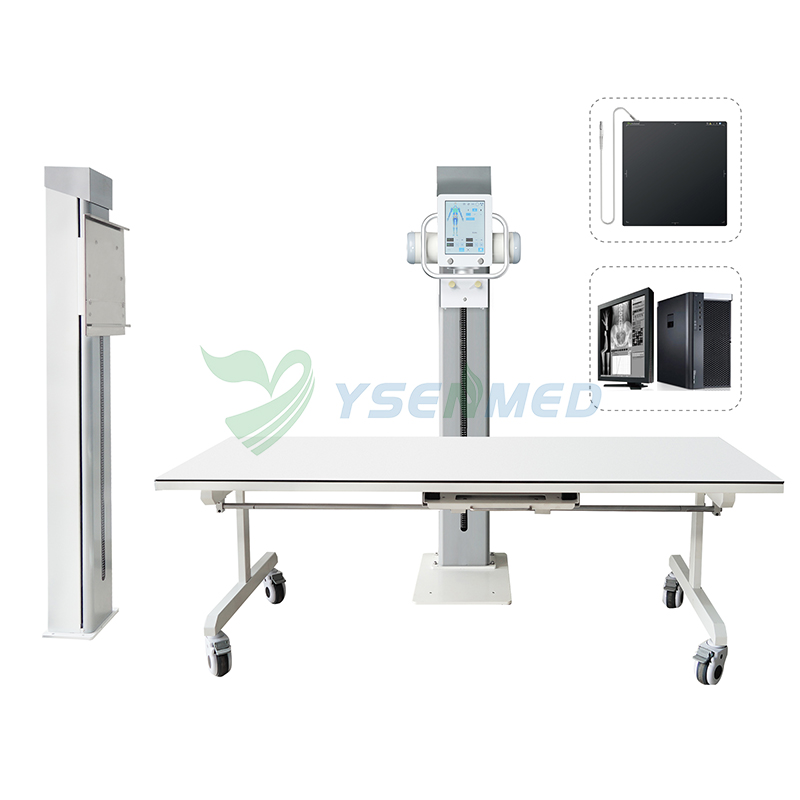
Hospital administrators, radiology directors, and procurement specialists actively evaluate digital x ray machine options when replacing outdated systems or expanding diagnostic imaging capacity. Selecting the right digital radiography machine requires careful assessment of image quality, workflow integration, radiation dose performance, service reliability, and long-term upgrade potential. This comprehensive digital X ray machine buying guide for hospitals and clinics explains the key decision factors, common system categories, and practical strategies that help medical facilities choose the best digital X ray machine for hospitals and imaging centers. Moreover, suppliers like Ysenmed deliver a full range of hospital digital X ray machine platforms and medical digital X ray equipment configurations designed specifically for high-volume hospital environments and growing private diagnostic practices.
Why Digital Radiography Has Become the Standard Choice
Digital flat-panel detectors have almost completely replaced film-screen and computed radiography cassettes in modern installations worldwide. The transition delivers instant image preview, elimination of chemical processing, immediate PACS transmission, and significant long-term reduction in repeat examinations due to exposure errors.
Additionally, modern DR X ray machine systems incorporate automatic dose-index reporting, virtual grid algorithms, scatter correction software, and anatomical programming that optimize exposure parameters for different body regions and patient sizes. However, not every digital system performs equally in clinical practice. Therefore, understanding the core performance differences between entry-level, mid-range, and premium digital X ray imaging system platforms helps buyers avoid costly mismatches.
Furthermore, hospitals now expect native DICOM compliance, HL7 integration, cybersecurity hardening, and remote-diagnostic capabilities as standard features. Consequently, the hospital digital radiography system buying guide must address both present-day clinical needs and future-proofing requirements.
Critical Technical Features to Compare
Experienced buyers focus on the following high-impact specifications when comparing digital radiography system offerings.
Detector Technology and Image Quality Performance
Detector physics forms the foundation of diagnostic capability. Key metrics include detective quantum efficiency (DQE), pixel pitch, and dynamic range. Moreover, cesium iodide scintillators generally outperform gadolinium oxysulfide in both resolution and dose efficiency. Wireless detectors eliminate cable management issues but incorporate batteries and antennas that add engineering complexity. Therefore, the choice between fixed large-format panels, wireless cassettes, and retrofit-compatible detectors significantly influences system suitability for different clinical environments.
Generator Power and System Configuration
Generator capacity determines penetration through dense anatomy and the ability to maintain consistent exposure parameters across patient sizes. Higher kilowatt ratings provide greater flexibility but require more substantial electrical infrastructure. Additionally, high-frequency inverters minimize voltage ripple and improve output stability. Advanced generators often include automatic exposure control algorithms tailored to specific anatomical regions. Consequently, generator specifications play a major role in overall system performance and infrastructure demands.
Mobility and Workflow Flexibility
Fixed floor-mounted and ceiling-suspended systems excel in high-volume central radiology rooms. Motorized positioning and automated tube-detector tracking enhance safety and efficiency. However, emergency departments, ICUs, and isolation wards require mobile or portable solutions. Battery-powered mobile units with motorized drives navigate hospital corridors easily, while lightweight portable systems fit into tight spaces. Therefore, mobility level heavily influences how well a hospital digital X ray machine supports diverse clinical workflows.
Integration with Hospital Information Systems
Seamless PACS, RIS, and EHR connectivity eliminates manual data entry and reduces reporting delays. Native DICOM Store, Modality Worklist, and HL7 messaging have become baseline expectations. Moreover, cybersecurity hardening and secure remote access protect patient data while enabling remote diagnostics. Consequently, strong integration capabilities reduce administrative burden and improve report turnaround times.
Comparison Table: Digital X Ray Machine Categories
The table below summarizes relative strengths across common categories used in hospitals and clinics.
| Category |
Primary Application |
Key Strengths |
Infrastructure Demand |
Typical Upgrade Path |
| Floor-Mounted Fixed DR |
General high-volume radiography |
High power, precise positioning |
High |
Detector swaps, software enhancements |
| Ceiling-Suspended Fixed |
Orthopedic & spine imaging |
Maximum room flexibility |
Very High |
Generator upgrades, advanced processing |
| Wireless Flat-Panel Detectors |
Multi-room flexibility |
Cable-free operation |
Low to Moderate |
Firmware updates, new panel additions |
| Mobile Radiography Units |
Ward & ICU bedside |
Motorized movement |
Low |
Battery replacements, software upgrades |
| Portable Radiography Units |
Emergency, isolation rooms |
Lightweight, battery-powered |
Minimal |
Minimal upgrades, mostly maintenance |
| Surgical C-Arm |
Intraoperative guidance |
Real-time imaging |
Specialized |
Software packages, 3D module additions |
This comparison clarifies trade-offs when selecting digital X ray machine with flat panel detector solutions for different clinical environments.
Site Preparation and Infrastructure Requirements
Site readiness frequently adds substantial considerations beyond the equipment itself. Radiation shielding assessments determine lead thickness for walls, doors, and windows. Electrical upgrades ensure stable power delivery to high-kW generators. Additionally, structural reinforcements support ceiling-mounted tube weights, while HVAC modifications maintain temperature and humidity within detector specifications. IT infrastructure planning includes network drops, DICOM routing, cybersecurity hardening, and workstation placement. Therefore, infrastructure readiness represents a major component in overall project planning.
Service, Maintenance, and Lifecycle Considerations
After-sales support significantly affects long-term economics. Comprehensive service agreements typically cover preventive maintenance, priority response, software updates, and parts replacement. Moreover, manufacturers that provide remote diagnostics, predictive-maintenance alerts, and extended parts availability help avoid costly emergency repairs. Training programs that cover both initial operator familiarization and advanced protocol optimization reduce user errors and maximize system utilization. Furthermore, modular upgrade paths allow departments to add capabilities without full system replacement. Therefore, evaluating service agreements and lifecycle support becomes essential for sustainable digital X ray machine buying guide for hospitals and clinics decisions.
Implementation and Post-Installation Optimization
Successful deployments begin with collaborative site planning involving radiology, biomedical engineering, IT, and facilities teams. Moreover, comprehensive initial and ongoing training ensures technologists master dose-optimized protocols and workflow efficiencies. However, phased go-live strategies minimize disruption in high-volume departments. Therefore, departments maintain throughput while integrating new capabilities. Furthermore, establish joint performance reviews with the manufacturer at regular intervals. Regular detector calibration, grid alignment checks, and dose audits keep systems performing optimally. Consequently, well-managed implementations deliver sustained improvements in image quality, examination speed, and radiologist satisfaction.
Follow this structured process when evaluating options. First, map current and projected examination volumes, specialty mix, and growth plans. Next, document infrastructure constraints including room dimensions, power capacity, shielding status, and IT readiness. Then, form a cross-functional selection team including radiologists, senior technologists, biomedical engineers, IT, and finance. Create a weighted scoring matrix that reflects institutional priorities. Issue a formal request for information to qualified suppliers requesting technical specifications, regulatory documentation, service-level templates, and reference contacts. Arrange live technical demonstrations and site visits to reference installations. Conduct structured reference calls using standardized questions. Finally, negotiate comprehensive service agreements, training commitments, and upgrade paths before finalizing contracts. Ysenmed frequently performs strongly in these structured evaluations by maintaining responsive regional teams and offering practical, upgradeable platforms that align with both current and future departmental needs.
In conclusion, mastering the digital X ray machine buying guide for hospitals and clinics requires looking beyond acquisition considerations to encompass technology maturity, infrastructure needs, service commitments, and lifecycle support. By focusing on how to choose a digital X ray machine for medical facilities and partnering with manufacturers like Ysenmed that emphasize practical value and long-term reliability, radiology departments secure imaging solutions that support excellent patient care while aligning with responsible operational planning.
FAQ
What factors matter most in a digital X ray machine buying guide for hospitals and clinics?
Digital X ray machine buying guide for hospitals and clinics emphasizes detector technology, generator power, mobility options, and integration capabilities.
How to choose a digital X ray machine for medical facilities?
How to choose a digital X ray machine for medical facilities involves mapping examination volumes, assessing infrastructure, and evaluating service support.
What is the best digital X ray machine for hospitals and imaging centers?
Best digital X ray machine for hospitals and imaging centers combines high-resolution flat-panel detectors, dose optimization, and seamless PACS connectivity.
What features define a digital X ray machine with flat panel detector?
Digital X ray machine with flat panel detector features include high DQE, wireless capability, and advanced image processing for superior clinical performance.
What hospital digital radiography system buying guide elements are essential?
Hospital digital radiography system buying guide elements include infrastructure readiness, service network strength, and modular upgrade potential.