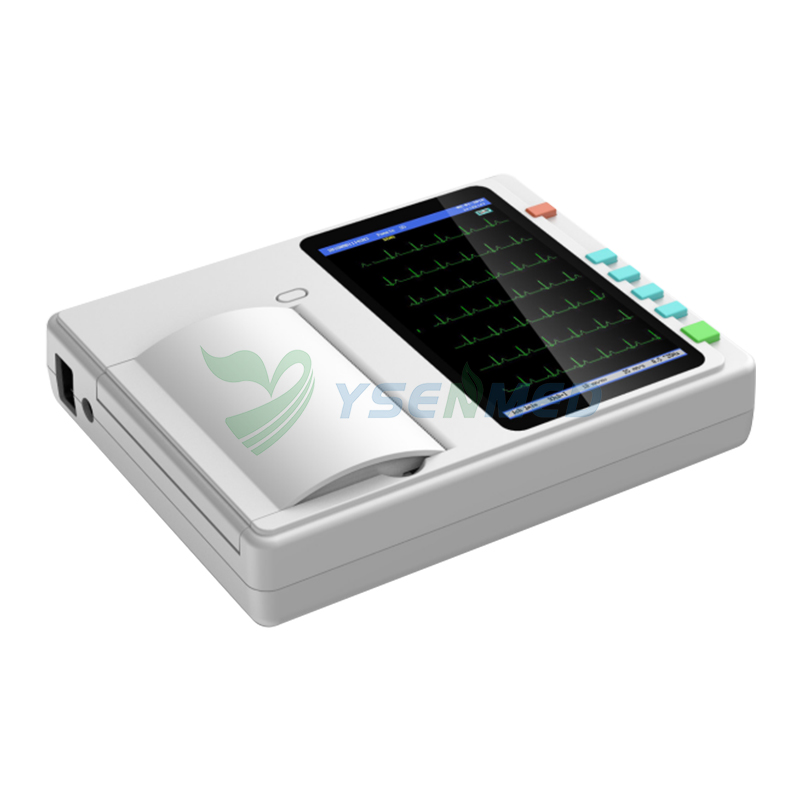
Clinic owners, general practitioners, cardiologists, and primary care teams actively search for the ECG Machine that best matches their patient load, diagnostic goals, and operational workflow. Selecting the proper electrocardiogram machine ensures accurate cardiac assessments while fitting seamlessly into daily practice. This comprehensive guide explains how to choose the right ECG machine for your clinic, covering essential features, practical considerations, and decision-making steps for both small private practices and larger outpatient facilities. Moreover, suppliers like Ysenmed offer a full range of digital ECG machine models and portable ECG machine solutions designed specifically for modern clinic medical equipment purchase needs.
Understanding ECG Machine Categories for Clinical Use
Clinics encounter several distinct categories of ECG machine based on portability, channel count, and intended application.
12-Lead ECG Machines
The 12-lead ECG machine remains the clinical gold standard for most diagnostic work. These systems record electrical activity from 12 different angles, providing comprehensive views of cardiac depolarization and repolarization.
Moreover, modern 12-lead ECG machine units incorporate high-resolution color displays, built-in interpretation algorithms, and direct PDF/electronic export capabilities. However, they typically require a stable power source and dedicated exam space. Therefore, 12-lead ECG machine models suit primary care clinics that perform routine cardiac screening, preoperative assessments, and follow-up of known cardiac conditions.
Portable and Handheld ECG Devices
Portable ECG machine designs prioritize mobility and rapid deployment. These compact units often weigh under 1 kg and operate on rechargeable batteries for several hours.
Additionally, many portable ECG machine models support Bluetooth or Wi-Fi transmission to smartphones, tablets, or cloud platforms. However, some versions limit recording to 1–6 leads, trading completeness for convenience. Therefore, portable ECG machine options excel in home visits, rural outreach, sports medicine, and telemedicine consultations.
Resting vs Stress ECG Systems
Resting ECG machine units focus on baseline recordings in a controlled setting. They emphasize signal quality, noise reduction, and automated measurements.
Moreover, stress ECG machine systems add treadmill or ergometer interfaces, real-time ST-segment monitoring, and arrhythmia detection during exercise. However, they require additional space and safety protocols. Consequently, clinics offering cardiac stress testing choose integrated clinical ECG system platforms that handle both resting and exercise protocols.
Key Features That Determine Clinical Suitability
Several technical and practical attributes separate basic recorders from high-performance ECG machine solutions.
Signal Quality and Noise Reduction
Superior ECG interpretation accuracy begins with clean signal acquisition. High-sampling-rate analog-to-digital converters (≥ 500 Hz) capture subtle waveform details.
Additionally, advanced filters remove baseline wander, muscle tremor, and 50/60 Hz interference without distorting diagnostic features. However, some systems offer selectable filter strengths for different patient types. Therefore, clinics performing pediatric or obese-patient ECGs benefit from flexible filtering options.
Lead Configuration and Electrode Support
Standard 10-electrode placement yields 12-lead tracings. Many modern digital ECG machine units also support reduced-lead sets (e.g., 3–5 lead monitoring) for continuous telemetry.
Moreover, some devices include Mason-Likar limb-lead placement for exercise studies. However, wireless electrode patches eliminate cable clutter. Consequently, ECG machine features and specifications related to lead flexibility improve patient comfort and technologist efficiency.
Interpretation Software and Algorithm Accuracy
Automated interpretation algorithms assist busy practitioners by highlighting abnormalities and suggesting possible diagnoses.
Additionally, validated algorithms (e.g., Glasgow, MEANS, Marquette) provide consistent results across patient demographics. However, clinics should verify algorithm performance in their specific population. Therefore, requesting validation studies or independent comparison data helps assess ECG interpretation accuracy.
Connectivity and Data Management
Modern ECG machine units integrate with electronic health records, hospital information systems, and cloud platforms.
Moreover, DICOM or HL7 export ensures seamless data flow. However, secure wireless transmission protects patient privacy. Consequently, strong connectivity reduces manual transcription errors and speeds specialist consultations.
Battery Life and Portability
Portable ECG machine models must operate reliably during mobile clinics or home visits. Long battery runtime (≥ 4–8 hours) and fast charging prevent workflow interruptions.
Additionally, lightweight construction (< 2 kg) and protective cases withstand daily transport. Therefore, clinics serving remote or elderly patients prioritize extended battery performance and rugged design.
Maintenance and Calibration Requirements
ECG machine maintenance and calibration directly affects measurement accuracy over time. Annual calibration verifies voltage and timing fidelity.
Moreover, self-test routines detect lead faults and battery degradation. However, modular designs allow easy electrode or battery replacement. Consequently, low-maintenance systems reduce operational overhead.
Comparison Table: ECG Machine Categories for Clinic Use
The table below compares key attributes across common categories.
| ECG Machine Category |
Primary Clinic Application |
Key Strengths |
Typical Limitations |
Best Suited For |
| 12-Lead Resting Desktop |
Routine cardiac screening & pre-op |
Highest diagnostic detail, robust software |
Requires dedicated space |
Primary care offices with steady volume |
| Portable 12-Lead Handheld |
Home visits, rural outreach |
Lightweight, battery-powered |
Smaller screen, fewer simultaneous leads |
Mobile practices, telemedicine |
| 3–6 Lead Monitoring |
Continuous ambulatory recording |
Long battery life, wearable comfort |
Reduced lead set |
Arrhythmia screening, Holter alternatives |
| Stress ECG System |
Exercise tolerance testing |
Real-time ST monitoring, treadmill interface |
Requires additional space & safety setup |
Cardiology-focused clinics |
| Wireless Patch-Based |
Extended monitoring |
No cables, patient mobility |
Limited lead views |
Post-procedure follow-up, atrial fibrillation screening |
This comparison helps clinics match equipment to their patient population and workflow patterns.
Step-by-Step Selection Process
Follow this structured approach when evaluating ECG machine options for your clinic.
- Map current and projected ECG volume, patient demographics, and primary indications (screening, arrhythmia, ischemia, preoperative).
- Document space, power, IT infrastructure, and staff training constraints.
- Define must-have features (e.g., wireless capability, automated interpretation, cloud export).
- Create a weighted scoring matrix reflecting your priorities (example: 30% image/signal quality, 25% ease of use, 20% service/support, 15% integration, 10% portability).
- Request demonstrations from 4–6 qualified medical imaging equipment suppliers and healthcare imaging solutions providers.
- Arrange reference calls with similar-sized clinics using the same models.
- Negotiate comprehensive training, first-year service, and upgrade terms before finalizing.
Ysenmed frequently excels in these evaluations by offering straightforward, reliable platforms with strong regional support and flexible configurations tailored to clinic needs.
Implementation and Ongoing Optimization
Successful adoption begins with collaborative planning involving physicians, nurses, and IT staff.
Moreover, thorough initial training followed by periodic refreshers ensures confident use. However, phased rollout allows gradual workflow adjustment. Therefore, clinics maintain service continuity during transition.
Furthermore, establish regular quality checks (electrode contact, calibration verification, artifact review) to sustain diagnostic accuracy. Consequently, proactive management maximizes clinical utility and equipment longevity.
In conclusion, how to choose the right ECG machine for your clinic involves matching technical capabilities to patient needs, workflow realities, and support expectations. By focusing on signal quality, usability, integration, and reliable partnership, clinics secure ECG machine solutions that enhance cardiac care while supporting efficient practice operations. Ysenmed provides practical, compliant systems that align with these priorities, helping primary care and specialty clinics deliver dependable diagnostics for years.
FAQ
How to choose the right ECG machine for your clinic?
How to choose the right ECG machine for your clinic involves matching lead count, portability, interpretation features, and service support to your patient population.
What is the best ECG machine for small clinics and private practices?
Best ECG machine for small clinics and private practices often includes compact 12-lead digital units with wireless capability and automated reporting.
What factors to consider when buying an ECG machine?
Factors to consider when buying an ECG machine include signal quality, ease of use, connectivity, battery life, and ongoing maintenance requirements.
What is the difference between portable vs 12-lead ECG machine for clinics?
Portable vs 12-lead ECG machine for clinics balances mobility and convenience against comprehensive diagnostic detail and standard lead placement.
What affordable ECG machine options for primary care clinics exist?
Affordable ECG machine options for primary care clinics typically feature reliable 12-lead digital recorders with essential interpretation tools and straightforward operation.