Selecting the right digital x ray equipment is a key decision for hospitals, clinics, diagnostic centers, and medical equipment distributors. Digital radiography systems have largely replaced traditional film-based units in new installations because they deliver faster workflow, immediate image availability, easier storage, and better potential for dose management. Procurement teams across Africa, the Middle East, Latin America, and Southeast Asia need equipment that balances image quality, reliability, power-supply compatibility, training support, and long-term serviceability.
This guide explains what digital X-ray equipment is, how it works, the main types available, critical selection factors, cost considerations, and how to evaluate manufacturers and suppliers. It is written for hospital procurement officers, importers, government healthcare projects, and distributors who require practical information before requesting quotations.
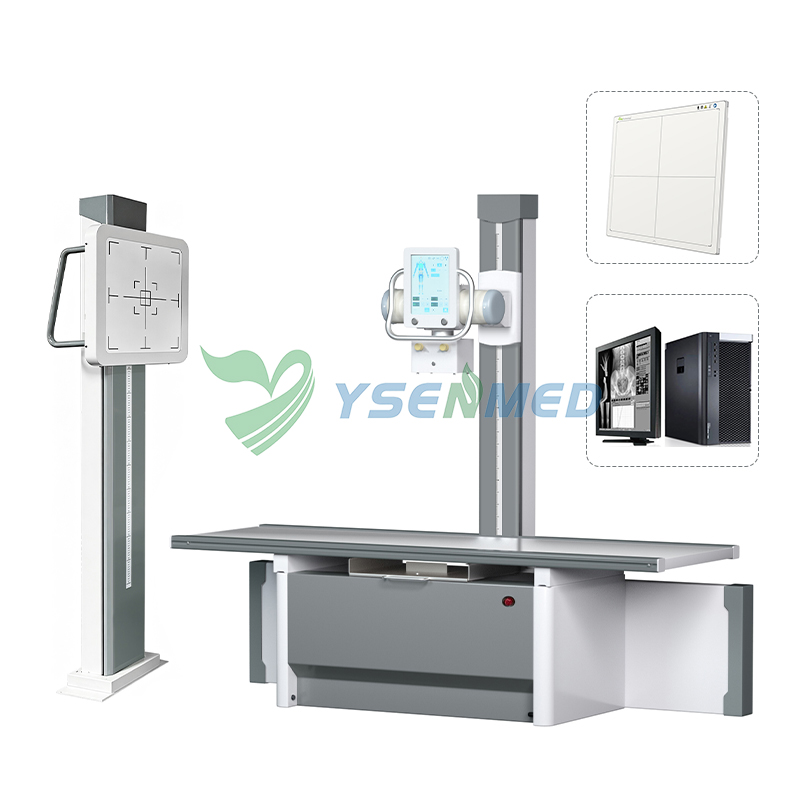
Digital x ray equipment refers to medical imaging systems that use digital detectors instead of traditional film or computed radiography plates to capture X-ray images. The core components typically include an X-ray tube, high-voltage generator, control console, patient positioning system (table or stand), and a digital detector—most commonly a flat-panel detector.
These systems convert X-rays into electronic signals that produce images within seconds. The images can be viewed immediately on a monitor, adjusted for contrast and brightness, stored in a PACS (Picture Archiving and Communication System), and shared across departments. Digital systems support lower radiation dose potential when properly configured and eliminate the need for film processing chemicals and darkrooms.
For many hospitals in emerging markets, upgrading to or installing digital X-ray equipment improves diagnostic speed, reduces operational costs over time, and supports better integration with hospital IT systems.
How Does Digital X-ray Equipment Work?
The basic physics remain the same as conventional radiography. High-voltage electricity accelerates electrons in the X-ray tube. When the electrons strike a metal target (usually tungsten), X-rays are produced. The beam passes through the patient; denser tissues absorb more radiation than soft tissue, creating contrast.
In digital systems the detector converts the remaining radiation into an electronic signal. This signal is processed into a digital image that appears on a workstation almost immediately. Operators select exposure parameters (kV, mA, and time) based on the body part and patient size. Modern units include automatic exposure control and pre-programmed anatomical protocols that help standardize image quality and manage dose.
Mobile and portable digital units follow the same principle but are designed for bedside use in intensive care units, emergency departments, or operating theaters where patients cannot easily be moved.
Main Applications of Digital X-ray Equipment
Digital X-ray systems are used across a wide range of clinical settings:
- General radiology departments for routine chest, skeletal, and abdominal imaging
- Emergency and trauma units requiring rapid fracture and injury assessment
- Intensive care and neonatal units with mobile digital systems
- Operating rooms using digital C-arm systems for real-time guidance
- Outpatient clinics and independent diagnostic centers
- Smaller hospitals and regional facilities that need versatile fixed or mobile equipment
In many facilities across Africa, the Middle East, Latin America, and Southeast Asia, a single well-chosen digital system often serves as the primary imaging resource for both inpatient and outpatient populations.
Key Features to Consider When Buying Digital X-ray Equipment
Procurement teams should evaluate both technical performance and long-term support. Important factors include:
- Detector technology and size (flat-panel detectors are standard for most new installations)
- Image quality and dose-management features
- Generator power (kW rating) matched to expected patient volume
- Ease of use, including intuitive interfaces and anatomical protocols
- System configuration (fixed ceiling- or floor-mounted versus mobile and portable)
- Compatibility with hospital IT systems (DICOM, PACS, HIS/RIS)
- Electrical requirements and tolerance for variable power conditions
- Mechanical durability of stands, tables, and collimators
- Availability of operator and biomedical engineer training
- Spare-parts supply chain and warranty terms
- Installation, commissioning, and after-sales service capability
Buyers should request current technical specifications, sample images where available, and clear statements of quality and safety compliance. Local regulatory requirements may differ by country and should be verified with the supplier and relevant authorities.
Types of Digital X-ray Equipment
Different clinical needs call for different configurations. The table below summarizes common options:
| Type |
Main Application |
Key Advantages |
Suitable Buyers |
| Fixed digital radiography |
High-volume radiology departments |
Highest image quality and throughput |
Large hospitals, diagnostic centers |
| Mobile digital X-ray units |
ICU, emergency, wards |
Bedside imaging without patient transport |
Hospitals with critical-care needs |
| Portable digital systems |
Smaller facilities, remote sites |
Easy transport, lower infrastructure needs |
Clinics, rural hospitals, project use |
| Digital C-arm systems |
Operating rooms, interventional work |
Real-time fluoroscopy |
Surgical and orthopedic departments |
| Entry-level digital systems |
Budget-conscious or transitional sites |
Lower initial investment with digital benefits |
Facilities upgrading from analog |
Digital systems dominate new purchases because of workflow efficiency and reduced long-term costs related to film and chemicals. Many manufacturers offer both entry-level and higher-specification models so buyers can match the system to patient volume and available budget.
How to Choose the Right Digital X-ray Equipment
Hospital size, patient volume, infrastructure, and local support capacity should guide the decision.
- Define the primary clinical need clearly (general radiography, trauma coverage, mobile imaging, or surgical C-arm use).
- Assess available space, floor conditions, and power supply stability. Systems with wider voltage tolerance or UPS compatibility can be advantageous in locations with irregular electricity.
- Calculate total cost of ownership, including installation, training, spare parts, and potential downtime.
- Confirm the manufacturer’s or supplier’s export experience, documentation quality, and ability to ship to destination ports in Africa, the Middle East, Latin America, or Southeast Asia.
- Request detailed specifications, configuration options, and any available references from comparable installations.
- Clarify warranty length, technical support response expectations, and spare-parts availability.
- Evaluate training programs for radiographers and biomedical technicians. Language of instruction and delivery method matter.
- For government tenders and multi-hospital projects, prefer suppliers that can provide complete documentation packages and project coordination support.
Distributors should also examine product consistency and whether OEM or private-label options are available.
Digital X-ray Equipment Price and Cost Factors
Exact prices vary widely and depend on detector technology, generator power, mobility features, software, and destination country. There is no single standard figure. Key cost drivers include:
- Detector type and size
- Generator capacity and advanced features (automatic exposure control, dual-energy options)
- Mechanical design (ceiling suspension, floor-mounted, mobile, or portable)
- Software packages and PACS connectivity
- Installation, site preparation, and radiation shielding requirements
- Training programs and warranty extensions
- Shipping, insurance, import duties, and local taxes
When requesting quotations, provide the intended use case, expected daily examination volume, available room dimensions, electrical supply details, and preferred delivery timeline. Accurate information allows suppliers to recommend appropriate configurations and avoid both under- and over-specification.
Why Consider Medical Equipment from China?
China has become a major source of digital X-ray equipment for global markets. Practical advantages often include:
- Broad product range covering entry-level to mid- and higher-specification digital systems
- Competitive pricing that helps hospitals and projects manage limited capital budgets
- Manufacturing capacity that supports both single-unit and multi-hospital orders
- Growing flexibility for configuration adjustments and OEM options for distributors
- Experience with export packaging, documentation, and international shipping
These benefits are meaningful only when the individual manufacturer or supplier maintains consistent quality systems, transparent technical data, and workable after-sales arrangements. Due diligence on each supplier remains essential.
A reliable supplier typically demonstrates:
- Documented quality management systems
- Clear product documentation and radiation safety information
- Experience exporting medical equipment to multiple regions
- Ability to support installation guidance or commissioning
- Operator and technical training resources
- Transparent communication on lead times and spare parts
- Willingness to recommend configurations based on actual clinical needs rather than the highest-priced model
YSENMED operates as a professional medical equipment supplier from China, providing digital X-ray systems and related hospital equipment to international distributors, hospitals, clinics, and healthcare projects. The company focuses on matching equipment configurations to buyer requirements and supporting export logistics, technical training coordination, and after-sales communication. Buyers evaluating suppliers should request current specifications and support details directly.
YSENMED Digital X-ray Solutions
As a medical equipment supplier serving overseas markets, YSENMED offers digital X-ray equipment suitable for hospitals, diagnostic centers, and distribution partners. Configurations are selected to address practical requirements common in Africa, the Middle East, Latin America, and Southeast Asia—straightforward operation, durable construction, and support for installation and training.
Distributors and hospital procurement teams can discuss intended applications, site conditions, and budget parameters so that appropriate models and accessories are recommended. YSENMED supports international shipping arrangements and works with partners to facilitate local training and spare-parts coordination where feasible.
Conclusion
Choosing digital x ray equipment requires careful attention to clinical needs, infrastructure realities, total cost of ownership, and long-term service capability. Digital radiography systems offer clear advantages in workflow, image management, and potential dose efficiency, yet the right choice still depends on patient volume, power conditions, staff expertise, and available support networks.
Hospital buyers, clinics, diagnostic centers, and medical equipment distributors across Africa, the Middle East, Latin America, and Southeast Asia benefit from clear specifications, realistic configuration advice, and suppliers prepared to handle export, installation, and training. Evaluating image quality, dose management, durability, and after-sales arrangements remains more important than any promotional claim.
If you are planning a hospital project or looking for a reliable medical equipment supplier, you can contact YSENMED for product specifications, configuration recommendations, and quotation information.
Frequently Asked Questions
What is the main advantage of digital x ray equipment over traditional systems?
Digital systems produce images within seconds, allow immediate review and adjustment, eliminate film processing, and integrate easily with PACS. They also support better dose management when properly configured and reduce long-term operating costs related to film and chemicals.
How do I choose the right digital x ray equipment for a hospital?
Define the clinical need, assess patient volume, available space, and power conditions, then evaluate detector technology, generator power, mobility options, training support, and total cost of ownership. Request configurations matched to actual site conditions rather than generic high-end models.
What specifications should I check before buying digital x ray equipment?
Key points include detector type and size, generator power, dose-control features, DICOM/PACS compatibility, electrical requirements, mechanical durability, warranty terms, and available training and spare-parts support. Local regulatory requirements should also be verified.
How much does digital x ray equipment cost?
Prices vary significantly according to detector technology, generator capacity, mobility features, software, and destination country. There is no universal figure. Provide clinical requirements and site details so suppliers can issue accurate quotations that include shipping and installation considerations.
Can digital x ray equipment be exported to Africa, the Middle East, Latin America, and Southeast Asia?
Yes. Many manufacturers and suppliers regularly export digital radiography systems to these regions. Successful delivery depends on proper export documentation, suitable packaging, freight arrangements, and coordination with the local importer regarding customs clearance and installation.
What after-sales support should a supplier provide?
Reliable suppliers typically offer installation guidance or commissioning, operator and biomedical engineer training, warranty coverage, spare-parts availability, and technical assistance (remote or through local partners). Clarify expected response times and parts lead times before purchase.
Are mobile digital X-ray units suitable for smaller hospitals?
Yes. Mobile and portable digital units are often appropriate where patients cannot easily be moved or where fixed installation space is limited. They enable bedside imaging provided basic radiation safety measures and power conditions are met.
What information should I prepare before contacting suppliers?
Prepare details on intended clinical use, approximate daily examination volume, available room dimensions and electrical supply, preferred configuration level, budget range if known, and delivery timeline. Clear information allows suppliers to recommend suitable systems and provide realistic quotations.